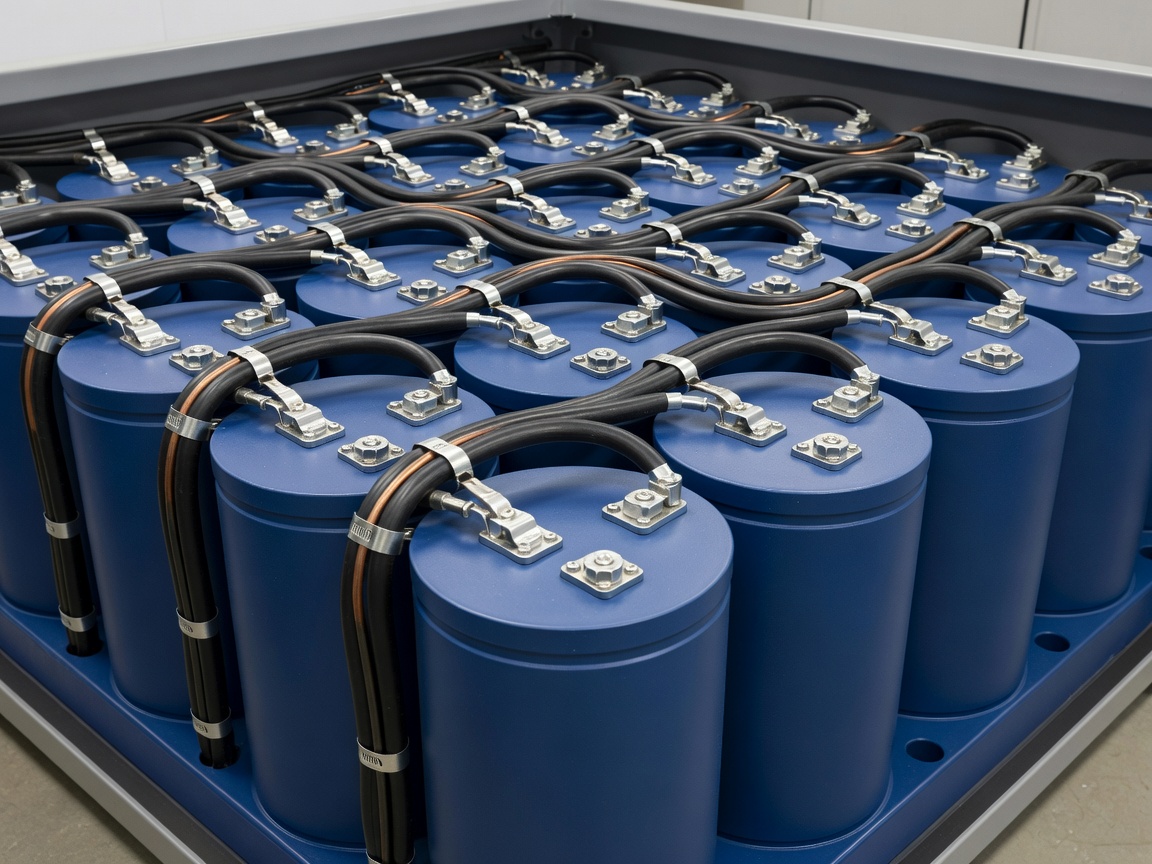
Beyond Lead-Acid: The Lithium Revolution
For decades, marine energy storage was dictated by the sheer weight and limitations of lead-acid batteries, whether flooded, AGM, or Gel. While reliable, these legacy technologies suffer from Peukert’s Law—their available capacity diminishes drastically as the discharge rate increases. For electric propulsion, which demands sustained, high-amperage draws, lead-acid is fundamentally inadequate.
The transition to lithium-based chemistry has completely rewritten the rulebook for marine architecture. Modern battery banks provide near-constant voltage curves, accept phenomenally fast charge rates, and weigh a fraction of their lead counterparts. However, not all lithium batteries are suited for the extreme rigors of the marine environment.
Lithium Iron Phosphate (LiFePO4)
In the marine sector, safety is paramount. When you are hundreds of miles offshore, a thermal runaway event is a catastrophic scenario. This is why the industry standard for marine energy storage is overwhelmingly Lithium Iron Phosphate (LiFePO4 or LFP), rather than the Lithium Nickel Manganese Cobalt (NMC) cells commonly found in electric cars and smartphones.
Why LiFePO4 dominates marine applications:
- Thermal Stability: LFP chemistry is inherently stable. It requires a significantly higher temperature to induce thermal runaway compared to NMC, meaning it will not easily catch fire even if punctured or overcharged.
- Cycle Life: While lead-acid batteries typically last 300-500 cycles at 50% Depth of Discharge (DoD), marine-grade LiFePO4 batteries routinely exceed 4,000 cycles at 80% DoD. This equates to over a decade of daily, heavy use.
- Usable Capacity: LFP batteries can be safely discharged to 10% or even 0% of their rated capacity without suffering permanent damage, allowing naval architects to utilize nearly the entire footprint of the battery bank.
High Voltage vs. Low Voltage Banks
Traditionally, boat systems operated on 12V or 24V DC networks. However, electric propulsion motors require massive amounts of power (often 10kW to 100kW per shaft). Pushing that much wattage through a 48V (Low Voltage) system requires incredibly thick, heavy, and expensive cabling to handle the massive amperage.
To increase efficiency and reduce weight, modern solar yachts are adopting High Voltage (HV) architectures, typically ranging from 350V to 800V DC. Operating at high voltage proportionally drops the required amperage, allowing for thinner, cooler-running cables and more efficient motor controllers.
However, HV systems introduce significant safety challenges. They require specialized marine certifications, isolation monitoring, interlock circuits, and trained technicians for servicing. For smaller vessels (under 40 feet) operating on less than 20kW of propulsion power, 48V systems remain a practical, user-serviceable standard.
The Role of the Battery Management System (BMS)
A lithium battery bank is entirely dependent on its Battery Management System (BMS). The BMS is a localized computer that monitors the voltage, temperature, and current of individual cells within the bank.
If a single cell begins to overcharge, the BMS will balance it by bleeding off excess energy or restricting the incoming charge. More importantly, if parameters exceed safe thresholds (such as an overheating event or a dead-short), the BMS will physically disconnect the battery bank via heavy-duty contactors to protect the vessel.
In marine applications, a high-quality BMS must also communicate seamlessly with the broader vessel network (like NMEA 2000 or CAN bus), allowing the helm displays and the Energy Management System to orchestrate power delivery intelligently.