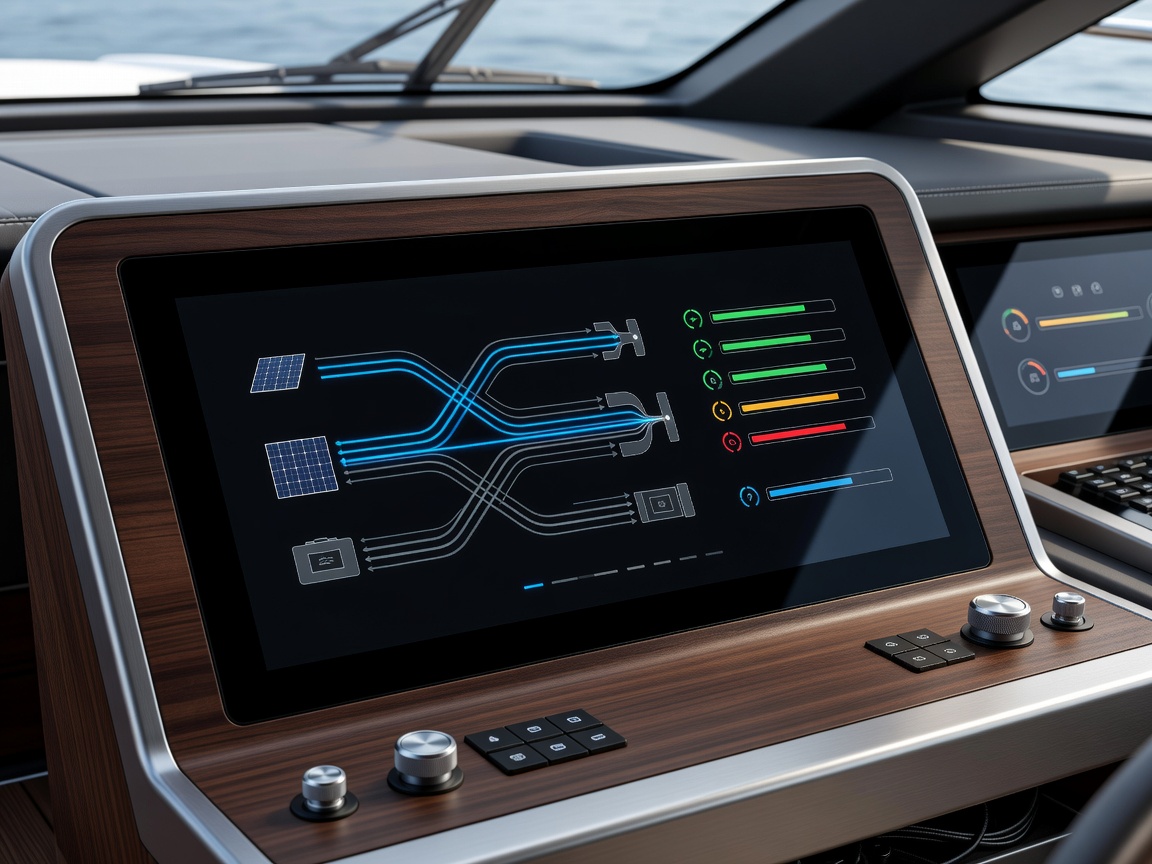
Orchestrating Complex Energy Ecosystems
A solar-powered yacht is essentially a self-contained microgrid. It possesses multiple generation sources (solar arrays, hydro-generators, backup generators, shore power) and multiple consumption sinks (propulsion motors, air conditioning, watermakers, induction galleys). The Energy Management System (EMS) is the software layer that ensures these systems cooperate safely and optimally.
Without a centralized EMS, a captain would have to manually monitor disparate screens for solar yield, battery state-of-charge, and instantaneous draw, constantly calculating whether they have enough range to reach port. A modern EMS automates this mental math, presenting clear, actionable data and intervening to prevent critical system failures.
Core Functions of a Marine EMS
1. Real-Time Data Aggregation
The foundation of any EMS is data collection. The software interfaces with the vessel’s network (typically NMEA 2000, CAN bus, or Ethernet) to read telemetry from the Battery Management System (BMS), motor controllers, and solar MPPT chargers. This data is unified into a single, intuitive interface displayed at the helm or on mobile devices.
2. Range and Autonomy Prediction
One of the most critical features for electric propulsion is range prediction. The EMS continuously analyzes the current State of Charge (SoC), instantaneous propulsion draw, and incoming solar yield. By integrating with GPS and weather routing data, advanced systems can dynamically chart the vessel’s maximum achievable range as a polygon on the navigation plotter, ensuring the captain is always aware of their operational limits.
3. Dynamic Load Shedding
To protect the core functionality of the vessel, the EMS employs prioritized load shedding. If the battery bank drops below a critical threshold (e.g., 20%), the software can automatically disconnect non-essential loads like water heaters or secondary air conditioning units, ensuring that remaining power is preserved entirely for navigation and emergency propulsion.
Integration with Navigation and Weather
The cutting edge of marine EMS development involves predictive modeling based on weather data. By downloading meteorological GRIB files via satellite connection, the software can predict cloud cover and wind speed for the upcoming days.
If the system predicts heavy cloud cover tomorrow, it might recommend delaying the use of the high-draw watermaker today, or it might advise dropping propulsion speed by 1 knot to extend the current battery reserves. This level of predictive intelligence transforms the vessel from a reactive machine to a proactive, energy-aware partner.
Remote Monitoring and Telemetry
Modern connectivity allows for robust remote monitoring. Owners can check the status of their bilges, battery levels, and solar yield from their smartphones anywhere in the world. More importantly, it allows manufacturers and service technicians to diagnose faults remotely. If a motor controller throws an error code, an engineer can log into the vessel's EMS, review the raw CAN bus data, and push a firmware patch over the air without ever stepping foot on the dock.
This digital infrastructure is what truly separates legacy vessels from the next generation of smart, autonomous solar yachts. The hardware provides the capability, but the software provides the intelligence.