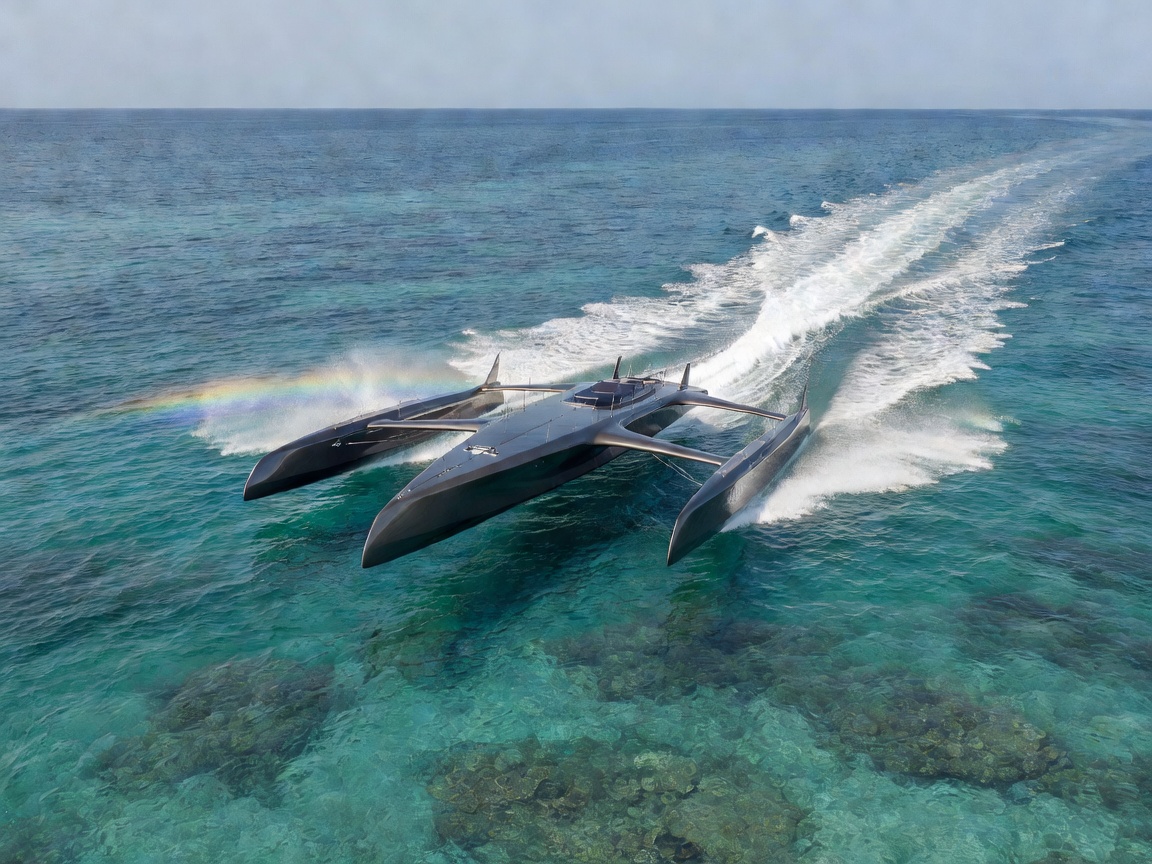
The Physics of Water Resistance
Water is nearly 800 times denser than air. Consequently, the greatest hurdle to electric propulsion is not battery chemistry or motor power, but hydrodynamic drag. For decades, the solution to inefficient hull design was simple: install a larger diesel engine. In the realm of solar and electric yachting, this brute-force approach fails. Every unit of energy is precious, demanding that hulls be optimized for minimal resistance rather than maximum interior volume.
Drag on a vessel comprises two primary components: skin friction and wave-making resistance. Skin friction is dictated by the wetted surface area of the hull. Wave-making resistance is the energy the boat expends pushing water out of its way to create a bow wave. Optimizing for electric propulsion requires attacking both simultaneously.
The Multihull Advantage
It is no coincidence that the vast majority of successful solar-powered yachts are catamarans. Multihulls offer distinct, unparalleled advantages for energy-efficient design.
- High Length-to-Beam Ratio: A catamaran relies on the distance between its two hulls for stability, allowing the individual hulls to be extremely narrow. This high length-to-beam ratio drastically reduces wave-making resistance, allowing the vessel to slice through the water rather than plowing over it.
- Massive Deck Area: The bridge deck connecting the hulls provides an enormous, unobstructed platform. This is critical for mounting the large, flat solar arrays required for autonomous cruising.
- Weight Distribution: Without the need for a massive lead keel (as found on monohulls), catamarans are inherently lighter, further reducing displacement and drag.
Displacement vs. Planing Hulls
Traditional motor yachts are often designed to plane—to ride on top of the water at high speeds. Achieving plane requires an immense surge of energy, which drains battery banks rapidly. While electric planing boats exist (often utilizing hydrofoils to lift the hull entirely out of the water), they are generally restricted to short-range, coastal hops.
For long-distance, autonomous solar cruising, full displacement or semi-displacement hulls are mandatory. These hulls are designed to operate strictly below "hull speed"—the maximum theoretical speed determined by the vessel's waterline length. By operating efficiently in the displacement mode, a solar yacht can achieve near-infinite range provided the sun is shining.
Advanced Materials and Weight Reduction
Weight is the enemy of efficiency. The heavier a vessel, the deeper it sits in the water, increasing its wetted surface area and, consequently, its drag. To combat this, modern marine architects employ advanced composite materials.
Carbon fiber, Kevlar, and epoxy resins are replacing traditional hand-laid fiberglass. Vacuum infusion techniques ensure the perfect ratio of resin to cloth, eliminating excess weight while increasing structural rigidity. The result is a vessel that is astonishingly light for its size, allowing the electric propulsion systems to operate at incredibly low consumption rates.
Hydrofoils: The Next Frontier
While primarily seen in racing sailboats like the America's Cup or small electric runabouts, hydrofoil technology is beginning to influence larger cruising yachts. Foils act like underwater airplane wings; as the boat gains speed, they generate lift. This reduces the wetted surface area to just the foils themselves, slashing drag by up to 80%.
While full foiling is highly energy-intensive to initiate and complex to maintain on a heavy cruising yacht, "foil-assist" designs are gaining traction. These systems provide partial lift, reducing displacement enough to significantly improve efficiency without the complexities of full airborne flight.